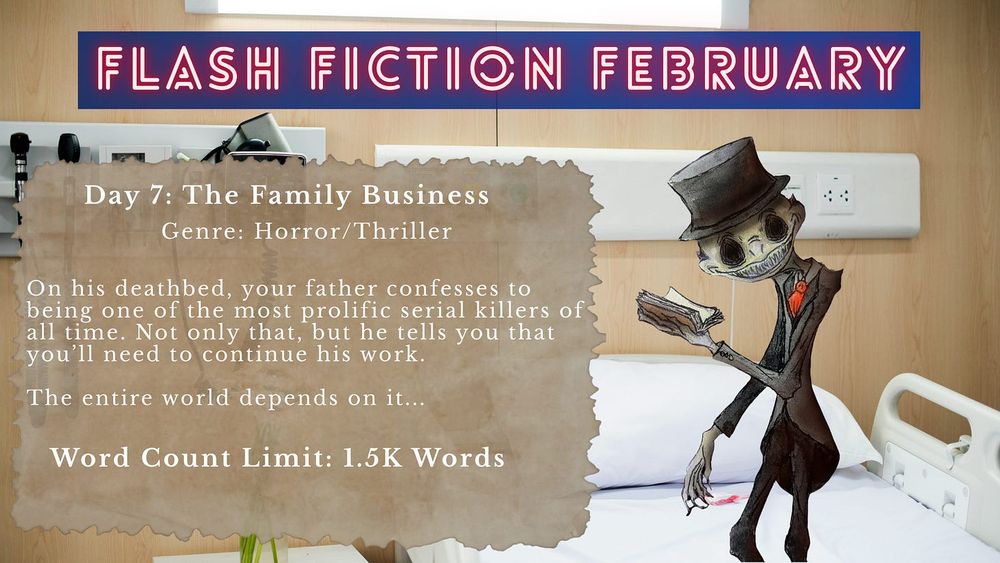
The room in the Atlanta hospice smelled of institutional lemon cleaner and the faint sweetness of dying flowers. Harlan Whittaker—once a legend in certain very quiet circles, the Pruner who kept the cosmic garden tidy—lay there like a deflated parade float, tubes snaking out of him like bad wiring. The monitors beeped their indifferent lullaby.
Twenty minutes earlier, the door had opened and in walked a man who sat in the molded-plastic chair, elbows on knees, hands clasped loose between them. He’d come straight from the airport in yesterday’s clothes: faded black hoodie, jeans worn soft at the knees, scuffed sneakers.
His hair was a little too long, curling at the nape in the way that happens when you forget appointments with scissors. He looked like a guy who’d once owned a record store that went out of business and never quite recovered the momentum.
“Hi Dad,” he’d said, voice soft as ambient surf rock. “I’m here to see you off.”
Harlan’s eyes had snapped open like a trapdoor spider sensing prey. He’d stared at the stranger—his son, apparently, the one the world had whispered about but never confirmed, the one Harlan had left behind in a haze of “family business” and interstate vanishings. The old man’s dry lips worked up to “Elias?”
“Nah, man. Call me Pepper. Or, y’know, whatever. Elias is cool too, I guess. Mom said it was on the birth certificate, but she also said Gorgons live on the moon. So…” He shrugged, shoulders rolling like tectonic plates taking a personal day. He set the travel mug on the bedside table, careful not to spill. “Heard you were checking out. Figured I’d swing by.”
Harlan wheezed something that might’ve been a laugh or a death rattle. “You... you’re real.”
“Far as I can tell.” Pepper pulled up the visitor chair, which creaked like it resented company. “So. What’s the deal? Mom said there’s something I need to know. You gonna drop some heavy truth shit? ‘Cause I just drove over from Athens. Traffic sucked. My karmic stack is a little depleted, if you get my drift.”
The old man gripped the sheets. His voice came out manic, precise, the way old men’s voices do when they are dying and monologing about the lost glory of a 1957 Howard Johnson’s before duct-taping a corrupt condo developer to a magnolia tree. “Listen, kid. I’ve been... pruning. For decades. The world—it’s overgrown. Weeds choking the roots. Politicians, developers, soul-suckers. I took them out. Clean. Necessary. The Veil needs feeding, or reality frays like cheap wallpaper. And now... it’s your turn.”
Pepper blinked slowly, processing like a dial-up modem in 2026. “The Veil. Right. Sounds intense. Like, cosmic HOA rules or something?”
Harlan’s eyes blazed, obsessive, encyclopedic. “It’s duty, boy. Legacy. Whittakers have kept the balance since the stars were still hot. I killed hundreds, those who needed it. The Shadow Harvester, they called me in the tabloids. But it was art. Poetry in pruning shears. And you... you’re the last branch. The blood knows. You’ll feel it. The pull. Start with the book under the pillow. Names. Methods. The neighbor who poisons strays? First cut.”
The Dude reached under the pillow, pulled out the leather tome. Flipped it open. Pages dense with Harlan’s spidery script: dates, latitudes, inventive disposal methods involving gators, feral hogs. quicklime, vintage postcards. He scanned a line, tilted his head. “Huh. ‘Feed the essence to the kaolin mine.’ Poetic. Kinda like composting, but with people. Eco-friendly, I dig it.”
Harlan leaned forward, strength borrowed from whatever afterlife loan shark was fronting him. “You have to continue. The world depends—”
“Yeah, yeah. The world. The Veil. Balance.” Pepper closed the book gently, set it on his lap like it was a mildly interesting thrift-store find. “Look, pops. I get it. You’re the vigilante poet laureate of the shadows. Manic, righteous, probably got a killer playlist for stakeouts. Respect. But me? I’m more... go with the flow. Bowl a few frames, a little weed, with friends who aren’t, y’know, cosmic gardeners. Killing people—even bad ones—kinda harshes my mellow. Like, permanently.”
Harlan’s face twisted, part rage, part heartbreak. “You don’t understand—”
“I do, actually.” The kid’s voice stayed soft, grounded, almost kind. “You’re dying, and scared the garden’s gonna overrun. That the weeds win. But here’s the thing: the world’s always been a madhouse. Always will be. You can prune till your hands bleed, but more weeds grow. Always. Me? I just try not to be one.”
The monitors slowed. Harlan’s breath hitched. “The book... the list...”
Pepper patted the cover. “I’ll keep it. Weird family scrapbook. Mom said you were a bale short of a haystack. That’s your trip, man. I’m more of a... designated driver for the universe.”
Harlan’s eyes dimmed, the manic fire guttering. A last whisper: “The Veil...”
“Will figure itself out,” the kid said, almost tenderly. “Or it won’t. Either way, we make do.”
He stayed until the monitors flatlined. Then he stood, tucked the book under his arm, drained the last of the White Russian he had been nursing for hours. Outside, the Georgia night pressed against the windows, indifferent, overgrown, beautiful in its chaos.
“Later, Dad,” he waved to the still figure in the otherwise empty room. “Thanks for the origin story. Kinda heavy, but... far out.”
He shuffled toward the elevator, already thinking about finding a coffee shop and a coin laundry. The family business was a closed shop. But his flannel smelled like formaldehyde. That was some weird shit.