Remember when the “rules” were supposed to matter? When international agreements and polite diplomacy were the default, and countries mostly argued over trade deals instead of satellite-killing missiles? Yeah… that era is over. Now the world runs on a simpler, nastier formula: if you can hit it, hack it, or intimidate it, you probably will.
Planes get their GPS jammed, missiles outrun the laws of physics, and governments lecture about rules while quietly rewriting them to suit themselves. Meanwhile, back home, polarization, protests, and economic anxieties make every election feel like a miniature Cold War.
Welcome to the age of abrasive pragmatism. What’s changed? In short, violence is fashionable again, security trumps efficiency, and the institutions meant to keep everything in check are being treated like buffet menus.
Let’s unpack how we got here, what powers are doing about it, and why it’s reshaping everything from global alliances to your local politics.
Force is Back in Style
For a while after World War II, the norm was persuasion first, force last. Now it’s force first, persuasion as cover story. Major powers are increasingly blunt: Russia jams planes and shrugs. China rehearses a Taiwan invasion on live TV. The U.S. designs bunker-busting bombers for “just in case.” Even smaller players — from Israel to the Houthis — act without apology.
The message is simple: might doesn’t just make right anymore, it makes reality.
The Arms Race Went Fast-Fashion
Weapons development has started to look like a TikTok trend cycle. Hypersonics, anti-ship missiles, satellite-killer tech — everyone is rolling out their “must-have” gadget of the season. Offense is cheap to scale, defense is pricey, and procurement officers everywhere are justifying it with a straight face: “we can’t afford not to.”
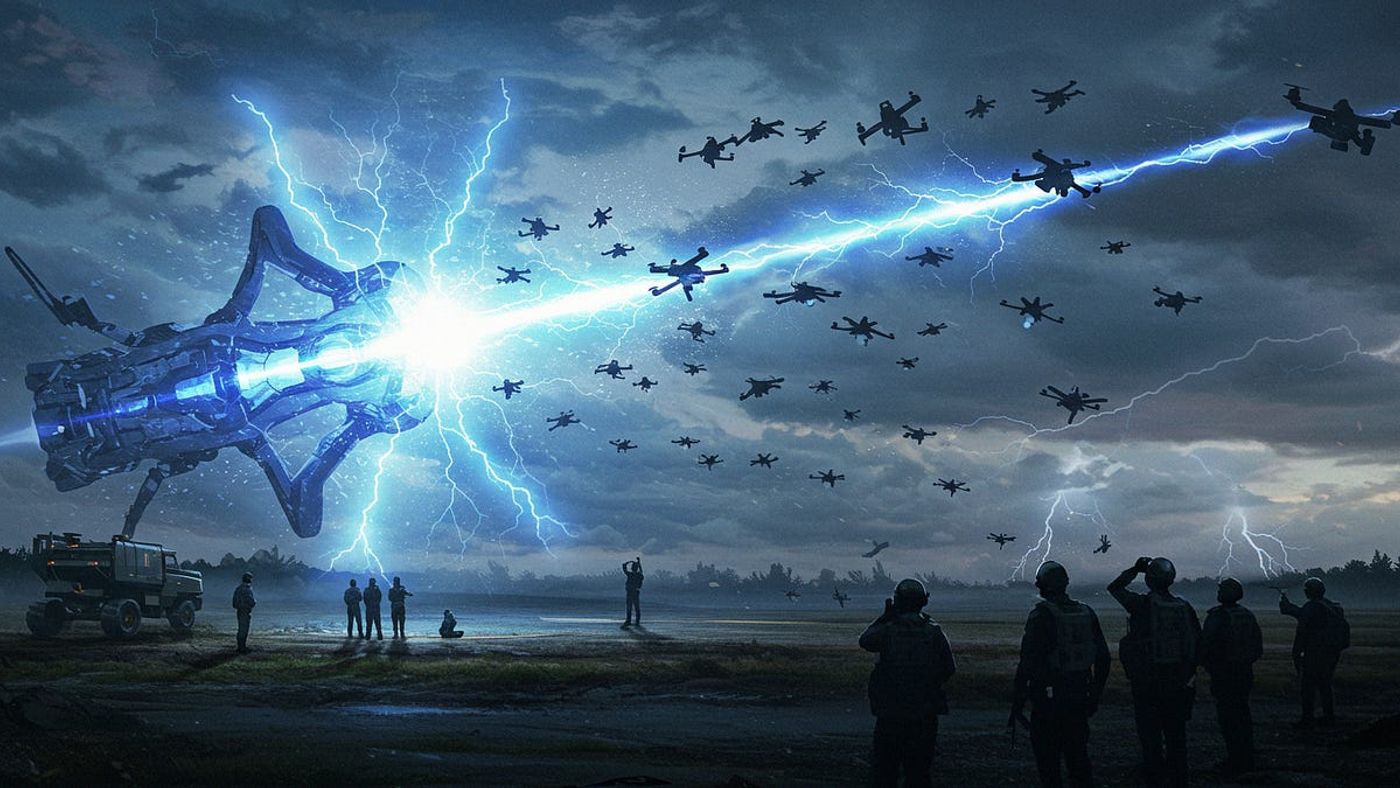
Case in point: the U.S. drone boom. Small drones are now considered “consumables,” like bullets. Which is practical — until you realize adversaries are working on electromagnetic zappers that fry entire swarms at once. The US itself just demonstrated its own zapper. Offense innovates cheaply; defense comes with a luxury price tag. And the cycle just keeps feeding itself.
Deterrence as Theater
We’re living in the age of performative deterrence. Military exercises, “accidental” leaks of new weapons, and menacing patrols aren’t just operations — they’re content. The point isn’t just capability; it’s transmissibility. If your rival’s public believes you’ll pull the trigger, you’ve already scored half the deterrence.
Call it strategic TikTok: everyone’s posting clips of what they could do, and hoping the algorithm (aka global opinion) keeps the rivals cautious.
Forking the World Order
The old global order isn’t collapsing — it’s being forked like open-source software. The U.S. wants guardrails that protect its role at the top. China wants lanes where it sets the tolls. Russia wants veto power whenever it feels like it. Meanwhile, the BRICS bloc is playing “build our own clubhouse” with parallel financial rails and satellites.
Will it work? Probably not cleanly. Everyone agrees the U.S. shouldn’t get all the perks anymore, but nobody wants to be the designated deficit spender who keeps the system liquid. It’s grievance-based multilateralism: lots of complaints, no spreadsheet that balances.
Industrial Policy Came Home
For decades, the West outsourced production to save a buck. Then COVID and geopolitical shocks exposed the obvious: maybe it’s a bad idea when your ventilators, PPE, or rare earth magnets only ship if your adversary feels generous.
Now it’s all about “resilience” — a polite word for industrial policy with a security badge. Governments are intervening, subsidizing, and retooling economies around production of “strategic goods.” Translation - some consumers will be poorer, but national security planners will sleep easier. Efficiency had its run; security just stole the spotlight.
Europe’s Impossible Triangle
Europe faces a brutal arithmetic: it wants to be green, it wants to be rich, and it wants to rearm. Pick two.
Energy costs, industrial decline, defense spending, and migration politics are colliding at once. Voters are unimpressed with lectures about “sacrifice for the future.” That’s why far-right parties are surging in Germany, France, and the UK: they promise to cut the knot, or at least blame the right villains. The math won’t magically fix itself, but the politics will punish whoever pretends that it might.
Domestic Politics as Foreign Policy by Proxy
Foreign policy doesn’t happen in a vacuum; it reflects the mood inside the house. When domestic politics is fractured, governments lose coherence abroad, and rivals quickly pick up on the wobble.
In Germany, the sudden deaths of far-right candidates didn’t rewrite foreign policy, but they deepened mistrust in institutions and fed a siege mentality among supporters. That kind of volatility makes it harder for Berlin to project stability — and easier for adversaries to doubt Europe’s unity.
In the United States, the split is sharper: one camp sees China as the defining threat of the century, while the other warns that the real danger is inside America itself. The result is a foreign policy that swings between hawkish grandstanding and inward collapse, leaving allies unsure which version of Washington they’re dealing with.
Domestic legitimacy underpins international leverage. When it cracks, foreign policy stops being strategy and starts looking like theater — a performance meant as much to reassure audiences at home as it does abroad.
Migration as Pressure Valve and Flashpoint
Labor markets say “we need more workers.” Housing shortages say “we can’t handle it.” Culture wars scream “close the gates.” Governments are trapped between economic math and voter rage.
This isn’t just Europe’s drama — Australia is staging its own anti-immigration protests as net migration soars past what the housing stock can absorb. Even the U.S., supposedly the classic immigration nation, is quietly rediscovering quotas and deterrence. Migration is both solution and spark, and nobody has a playbook that doesn’t end with street protests.
The Vibes: Abrasive Pragmatism
Zoom out and the pattern is obvious: the global system has shifted from normative pretense to instrumental clarity. Force is back in fashion. Rules are optional. Efficiency bows to resilience. Alliances are transactional. And politics, at home and abroad, is permanently set to “friction.”
This isn’t the end of order — it’s just the end of politeness. Think of it as a new age of abrasive pragmatism. Governments will keep promising prosperity and peace, but what they’re actually selling is risk management with sharper elbows.
The Takeaway
Don’t expect a clean replacement of the world order. Expect forks, fragments, and parallel systems. Don’t expect stability in domestic politics — polarization is baked in. Don’t expect cheap security — offense is always cheaper than defense.
The world isn’t falling apart; it’s just running on new rules:
Build it? Deploy it.
Jam it? Jam it.
Lose the argument? Change the subject to survival.
It’s messy, it’s dangerous, and it’s here to stay.