I wasn’t there the night Grant killed the rooster, nor the morning after when Connor carried the body to the big house like a preacher carrying a dead child to the altar. But I poured the bourbon that loosened Grant’s tongue, and I scrubbed the sink till the porcelain forgot the blood. I know the yard the way a groundskeeper knows a graveyard—every divot the chickens scratched, every rose they murdered, every lie Grant polished into a profit. Here’s what I know, and what I don’t, and what the river three miles off still laughs about when the wind’s right.
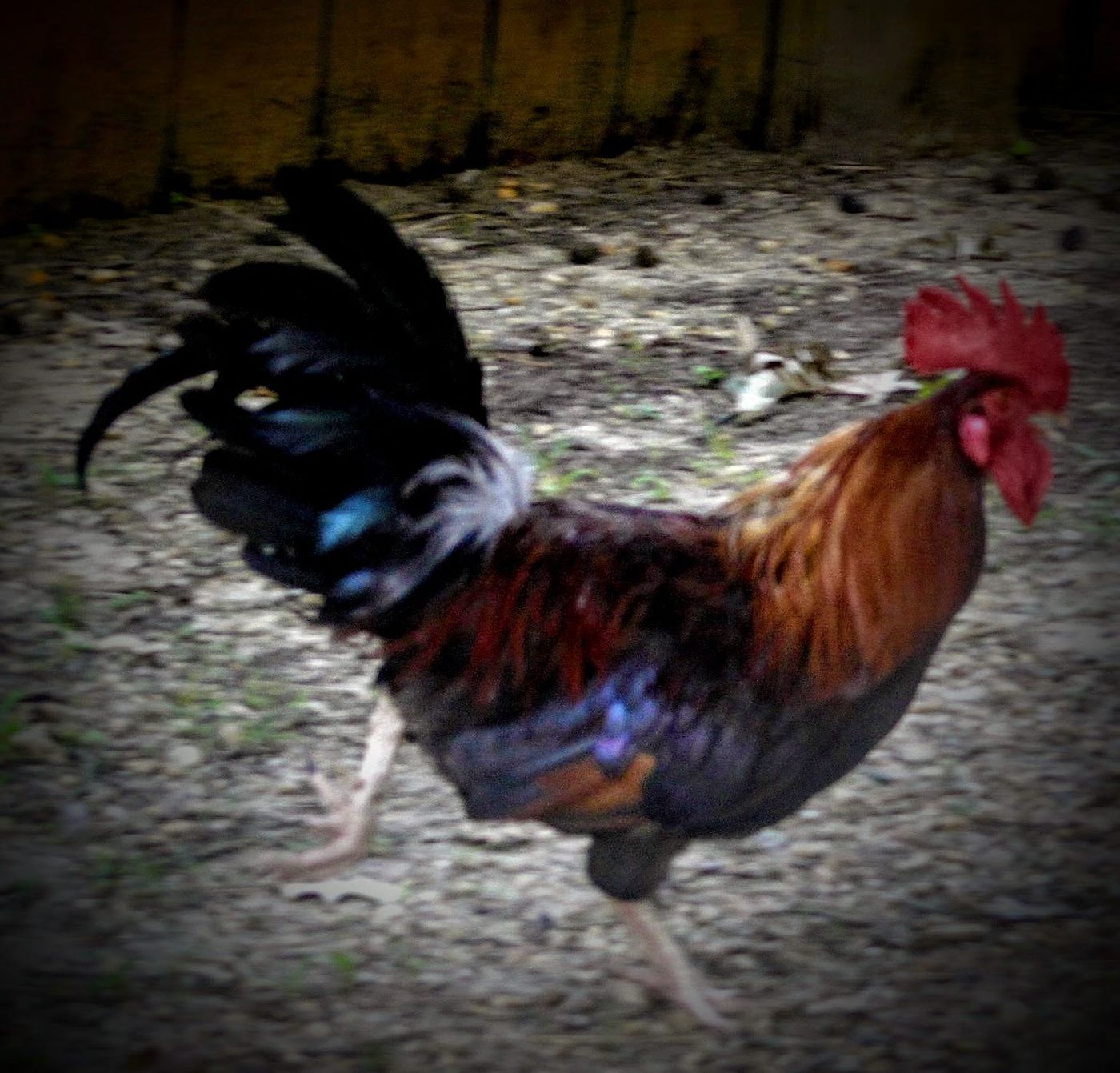
Connor named the bird Emerson—said it with a half-smile, like a man telling a joke he’d forgotten the punchline to, or maybe one he never meant to tell at all. Every dawn that rooster raked the air with a fierce, desperate crow, the last howl of a broken fowl, a sound that started in the gut and landed in the tops of the pines.
Grant hated it. “Like a damn horn,” he’d mutter into his coffee cup, watching the steam curl the same way the smoke curled from his cigars, the ones he lit with the lighter his father gave him, the one he used to burn the letters he chose not to send. He’d always taken that solemn rising up and vanishing for a kind of wisdom, the way some men take silence for prayer.
Grant knew things about Connor nobody else knew, things that lived in the dark between them like fish too cagy to net. They’d been boys together, once upon a long time ago, down where the river wrapped around a wide curve of pine forest thick as gossip. They’d sat on the quiet mud banks, knees sunk in clay, swearing oaths of loyalty with a pocketknife and a thirst for forever. Those oaths were remembered now only to be resented, the way you resent a song you can’t stop humming long after the joy of it is dead. Nowadays, Grant let Connor come around, even when he smelled like weed and axle grease, even when the chickens were scratching the roses to ruin and the event staff muttered curses into their champagne flutes.
Connor didn’t live there. He lived in a trailer three miles down a dirt road that turned to soup when it rained, a tin box with a porch light that flickered like a conscience. But he’d drift in every day for a couple hours, boots caked, guitar slung over one shoulder like a rifle. He’d tend the chickens, smoke his weed, play his blues down by the garden he nominally kept, although the only thing growing down there this season was regret and a tomato too stubborn to quit.
The chickens regarded him in that easy, eager way creatures show affection, the way a dog forgives a man who kicks it if he comes back with a scrap. But Emerson the rooster had a temper. The hens clucked and scratched, kept close like church ladies, but there was the one, the “Belle of the Ball,” a White Sultan with feathers clean as frost and a secretive way about her, slipping around corners, staying clear of the flock like she knew something the others didn’t.
Emerson mounted her one day, fierce, sudden, filling her up and nearly killing her. He held the back of her neck with his talons till the blood ran red as the river at sunset. Feathers everywhere, like snow in a slaughterhouse. Connor separated them, voice shaking, and after that she was kept in a pen apart, a white ghost pacing the wire. From that moment on, lovelorn Emerson crowed without end, morning and evening, a mad hymn to the thing he could not have. Like many a rooster before him. Like many a man.
Grant heard the bird every dawn and every dusk, the lovelorn cock raging at a world it couldn’t control, and every day he’d ask Connor to be rid of it. Connor would nod with that slight twist of a smile, the one that said I hear you, but I ain’t listening, and the next day he’d be back, setting the rooster loose on the lawn like a promise he never meant to keep. Grant knew nothing would change. Some things are rooted deeper than sense.
Grant didn’t like the bird’s name. Years before, when the space between them was already widening like a crack in porch wood, Grant had a fling with one Randolph Edison, an old-money dandy from over in Monticello. Three weeks of clandestine heat and shame that ended his marriage and sent his children scattering like startled birds. He was never sure if Connor knew, but he’d long suspected it, the way you suspect a storm by the smell in the air. Emerson, Edison—that would be just like Connor, to name a rooster after a ghost and smile like it was nothing.
The homestead was serene and beautiful, done up like a study in Architectural Digest, all reclaimed beam and restored respectability. Grant had made it in life as a caterer and event host, had become wealthy throwing parties where people paid to pretend they belonged to something older than money. The rental houses—little cottages he’d built out with Connor’s carpentry back when Connor still showed up sober—lined the back acreage like polite sentries.
Connor had been Grant’s partner in the early days, back when the business was just a dream and a food truck and two boys who thought hunger was a kind of fuel. But addiction and wanderlust and life had left Connor unable, or more likely unwilling, to keep up with the hard work of building an empire. After the breakup, Grant kept him on as a carpenter, paid him in cash and silence, and now, older and unable to work steady, Connor lived in that trailer, coming and going like a tide that never quite decided to stay.
After a long evening of bourbon and the glow of another event that felt more like work than celebration, Grant walked outside into the smell of honeysuckle and the low hum of crickets. The rooster sounded off into the darkness, a mournful cry that peeled the night back like old wallpaper. Grant finally had enough of the goddamn bird. He went inside, found his old revolver—a relic he hadn’t held since the night the burglars broke the study window two decades ago. He stood in the dark until the rooster became a shadow against the grass, then one shot cracked the quiet open, clean as a snapped oath.
Connor showed up like clockwork the next morning. His heart sank as he crossed the lawn and found Emerson’s bloody carcass. He cradled its lifeless body as if it were a child, and carried it to the big house. He laid it down in Grant’s sink, right where the caterers set out the crystal, right where the blood would stain the porcelain for days.
When Grant came home that evening he saw it there, limp, neck bent wrong, and in that moment he felt something break open in himself, something that had been cracked since the day he chose the house over the river. He took a long swallow from his glass, his throat raw as the bourbon burned, and went looking for Connor.
He found him down by the garden, sitting on the low stone wall where they used to split stolen cigarettes and swear they’d never grow old. They stared at each other for a minute, two old friends turned to strangers, bound together by blood and memory and the weight of a dead bird. The silence stretched until Grant, his voice slurred, said, “You coulda taken him away, Connor. That was all I asked.”
Connor held his own, and there was no apology in him. “You fuckin killed Emerson,” he said finally, his voice low, steady as the river. “I just wanted him to have his own place. That’s all any of us ever want, Grant.”
Grant’s laugh came out harsh, a bark that scattered the crickets.
They stood across from each other in the dim light that spilled from the hanging lanterns, the ones still swaying from the last wedding, paper bells bruised with candle-smoke and the ghost of somebody’s first dance. Grant’s long shadow stretched jagged across the lawn like a forsythia stem. Connor swayed in that slow, loose way he had, the way a weed sways when it’s too stubborn to lie down.
And in between them, there but not there, lay the dead rooster, its broken neck bent sideways in the sink, body splayed out like a question nobody wanted to answer. Its absence screamed into the quiet, loud as a crow, louder than the river three miles off that still ran like it had somewhere better to be.
Grant’s hand tightened around the glass until the crystal bit his palm. He took a long, sloppy swallow, letting the bourbon scorch his throat, feeling it burn down into the pit of him like he could drown something there, like maybe if he drank enough he could fill the hole that had opened up the day his wife walked out and never looked back at the house he’d polished till it shone like a lie. The liquor tasted of oak and old promises, like the bottle he’d cracked open the night Randolph Edison left and took Grant’s family with him.
“You had to do it, didn’t you?” His voice came out low, tight with years of unspoken things, years of sweeping rot into corners and calling it renovation. “Had to put that fuckin bird in my sink, Connor. Right where I’d have to deal with it. Right where the caterers work. What are you trying to say?”
Connor blinked, shot his almost-smile, the one he wore when he knew something he wasn’t about to share, the one that had always made Grant want to punch him and hug him in the same breath. “Ain’t saying a thing, Grant. Just leaving you a reminder.” He tilted his chin toward the house, toward the kitchen window where the rooster’s body lay under the single Edison bulb like a sacrifice nobody asked for. “He’s still looking at you. Like a question you won’t answer.”
“Reminder,” Grant spat, stumbling forward a step, his eyes gleaming with a look that wasn’t just drunken anger but something inchoate, older, a quiet, steady rage that had lived a long time in his bones, fed on every unpaid bill Connor ever left, every promise Connor ever broke, every morning Grant woke up to the sound of that goddamn bird raking the air like it owned the sky. “I don’t need a goddamn reminder. I need you to take what’s yours and leave it gone.” His words slurred, but the anger in them was sharp, sharp as the knife they’d used to cut their palms that summer by the river when the world was still wide and the oaths were fierce and the blood had run hot between them.
“Take what’s mine? What’s mine, Grant?” Connor shook his head, looked up at the sky as though he were waiting for it to split open, as though there were something higher than them both that might finally weigh in, some judge in the pines that remembered when they were boys and the river was their church. “You don’t know a thing about what’s mine. Only thing mine is the blues I play to the hens when the sun goes down. And I already took it. You can’t steal that.”
Grant lurched forward, nearly dropping the empty glass, his body heavy and sluggish from the drink, from the weight of years of sterilizing old wounds and calling it progress. His voice came out thin and ragged, like a screen door hinge that had rusted through. “I know what’s yours, Connor. Nothing. Always been nothing. Just drifting from one place to the next, smoking weed and serenading chickens while I’m out here building something that lasts.”
Connor’s face twisted, but there was a sadness in his eyes, that quiet, soft sorrow he wore as easily as a coat, the same sorrow that had settled in the day his daddy died and left him the trailer and a guitar with three strings missing. “Least I’m living, Grant,” he said softly, looking out toward the darkness where the roses stood clawed to stumps by the chickens, glowing under the lanterns like open wounds. “Least I ain’t playing host at a house that don’t even feel like mine. Least I don’t think I can own every inch of ground I walk on, polish it till it shines, then charge folks to stand on it for an hour and take pictures.”
Grant stood there, fists clenched, the bourbon thick in his blood, his jaw tight. The words struck somewhere deep, slammed him in that empty pit he’d never let anyone see, not even Connor, not even the night they sat on this same wall and swore they’d never leave each other behind. “This house has been in my family for three generations, Connor. I built it back up from the dust and ruin they left it in. I made it mine,” he spat, voice shaking as though the words themselves were holding him together, as though if he said it loud enough the myth might turn true.
“Built it up, yeah. Built it up for what, Grant? To host your pretty parties, to fill it with people who don’t know a damn thing about you? People who pay to be here for an hour or two, take pictures of the roses the chickens peck, and walk out thinking they’ve touched something real.”
Connor looked around the yard, where the lights still hung from the last event, casting a low glow over the flowers and hedges, over the stone wall that had once held up a boy’s promise: “Till the river runs dry.” The river, of course, still ran. “This place don’t feel like yours, Grant. Feels like a picture out of a magazine—hollow, dressed up, empty. Like you swept the shit into the corners and called it renovation.”
Grant’s face flushed, his grip tightening around the glass until his knuckles went white, until the crystal sang a high, thin note against his skin. “Empty? You think my life’s empty?” He stepped closer, the bourbon loosening something raw inside him, something that had been coiled tight since the day Connor blew up the partnership and skipped off to Hawaii. “I’m making something here, Connor. I built a life. Not like you, drifting from one thing to the next, picking at the scraps, leaving me to clean up the mess.”
Connor let out a low chuckle, laced with the pity Grant hated most, the pity that tasted like river water and regret. “Making a life? You’re just filling it up, Grant. Filling it up with noise and strangers. You call it yours, but it’s just a place for other people to come and pretend. Ain’t no soul in it. That’s why you can’t stand that I bring those chickens, isn’t it? Cause they’re messy, cause they scratch at the ground and remind you it’s just dirt underneath, just like everywhere else. Just like the riverbank where we cut our hands and swore we’d never be our daddies.”
Grant’s hand shook. He could feel his control slipping, like sand through his fingers, like the river taking everything back. “You think you’re better than me? You’re out there in your shack, living off whatever you scrape together, playing that busted guitar to the hens while I’m keeping this place alive? You’re nothing, Connor. You always have been. Just blowing in the wind, making a mess for the rest of us to clean up.”
Connor looked at him, his face softening, an undeniable sorrow clouding his eyes, the same sorrow that had settled in the day Grant’s wife left while Connor stood drunk and helpless in the driveway. “Maybe I am nothing, Grant. But I don’t pretend to be anything else. Don’t need to dress up my life, put on some big show. Least I got that.”
He took a step forward, looking Grant square in the eye, his voice low, steady as the river that had watched them grow old and apart. “Thing is, I ain’t ever been ashamed of what I am. But you—you can’t stand it. Can’t stand the truth in it, in me. Reminds you of all that emptiness you try to hide with flings and bourbon and pretty lights and the sound of that bird you fuckin killed.”
Grant’s face twisted, and his voice came out ragged, close to breaking, close to that last sound Emerson had made, desperate, fierce, already half-gone. “You don’t know a goddamn thing about me, Connor. You’re just a stray dog looking for scraps. Coming here, pretending this place is yours, scratching up my land like you got some right.”
Connor smirked, that small, knowing smile that dug in deep, the one that had always made Grant feel exposed. “I am a stray, Grant. I ain’t got much. But at least I ain’t pretending to own the world. Least I know where I stand. You’re just standing on top of it all, trying to pretend it’ll never crumble.” He paused, his gaze softening again as he looked around the yard, at the lights, the pristine lawn, the empty silence that had settled around them like dew. “But it will, Grant. One day, it’s all gonna come down, and there won’t be anything left but the dirt. You can shoot all the roosters you want, but you can’t kill what’s real.”
The words hung in the air like smoke, like the smell of honeysuckle and gunpowder. Grant felt something snap, something dark and deep breaking lose in him, a rage he hadn’t known he’d been holding all these years, all the long nights of pretending, of pouring spirits down into the empty pit that opened up inside him every time the lights went down and the guests left and the house echoed with the sound of his own footsteps. The gun was cold and heavy in his hand, but he barely felt it. The only thing he felt was Connor’s eyes, burning, watching him like he already knew, like he’d known all along, like he’d been waiting for this moment since the day they cut themselves and let the blood drip into the river.
“Get out,” Grant choked out, his voice low and shaking, shaking like the lanterns, shaking like the lie he’d built his life on. “Get out, before I do something I can’t take back.”
Connor didn’t move, didn’t flinch, just looked at him with that quiet, steady gaze that tore at Grant more than any insult, any blow could have. He reached up, slow, deliberate, and undid one more button, letting the shirt fall open wider. The scar caught the lantern light and held it, a pale river running straight to the heart. “Do it, then,” he said softly, his voice barely more than a whisper, soft as the crickets, soft as the dirt itself. “Go on, Grant. You already killed the fuckin rooster. Kill em all, Grant. Kill every goddamn one of em. Kill me too, you withered up old son of a bitch.”
Grant’s face flushed, a rage flared inside him, hot as the bourbon, hot as the blood they’d spilled together. It was the look, tender, haunting, knowing. Connor always looked like he knew a secret, like he’d seen the bottom of the river and come back smiling. “Get out,” Grant snarled, his voice thick, the bourbon fueling a wild, reckless edge. “Take your goddamn birds and your fucking weed and leave.”
Connor only stared, his eyes sad and far away, a hint of pity at the edges, and that soft laughter came again, a whisper of something neither forgiveness nor judgment, just the sound of a man who had already made peace with the river. “That’s what you want,” he murmured, almost to himself. “That’s what it always was.”
Without thinking, without reason, without even understanding the man inside him anymore, Grant pointed the pistol at Connor’s chest. Connor’s eyes widened, but he didn’t move, didn’t even flinch, just stood there, shirt open, scar gleaming, waiting.
The shot cracked through the air like thunder, sharp, final. Connor staggered, his body folding slowly, gently, as though he were sinking into sleep, into the river, into the dirt that had always been waiting. He fell backward into the grass, and for a moment, his eyes looked up at Grant, soft, empty, the same eyes that had watched the river take the light that last summer. Then they rolled backward, into his skull. The silence roared back in, loud as the midnight freight train, loud as a sworn oath.
Gun still in hand, Grant slumped, breath heavy, his heart thundering. The cold weight of what just happened settled over him like dew, like the river mist that rose every morning and never quite burned off. He dropped the gun, let it fall into the dirt beside Connor’s still form, and he stared down at the empty shell of a man who had once been his brother, his shadow, his reflection. The rooster’s body lay in the sink, a reminder of all living things now dead. The river kept flowing.
He knelt there till the dew soaked his knees, till the hen’s last cluck faded, till the white feather stuck to Connor’s blood and refused to lift again.
The sun came up the color of old brass. Grant lay quietly beside Connor, the hole in his temple clean as sunrise, the old pistol just by his now cold hand.