Global Chess, Domestic Chaos, and the Sweet Smell of Tallow
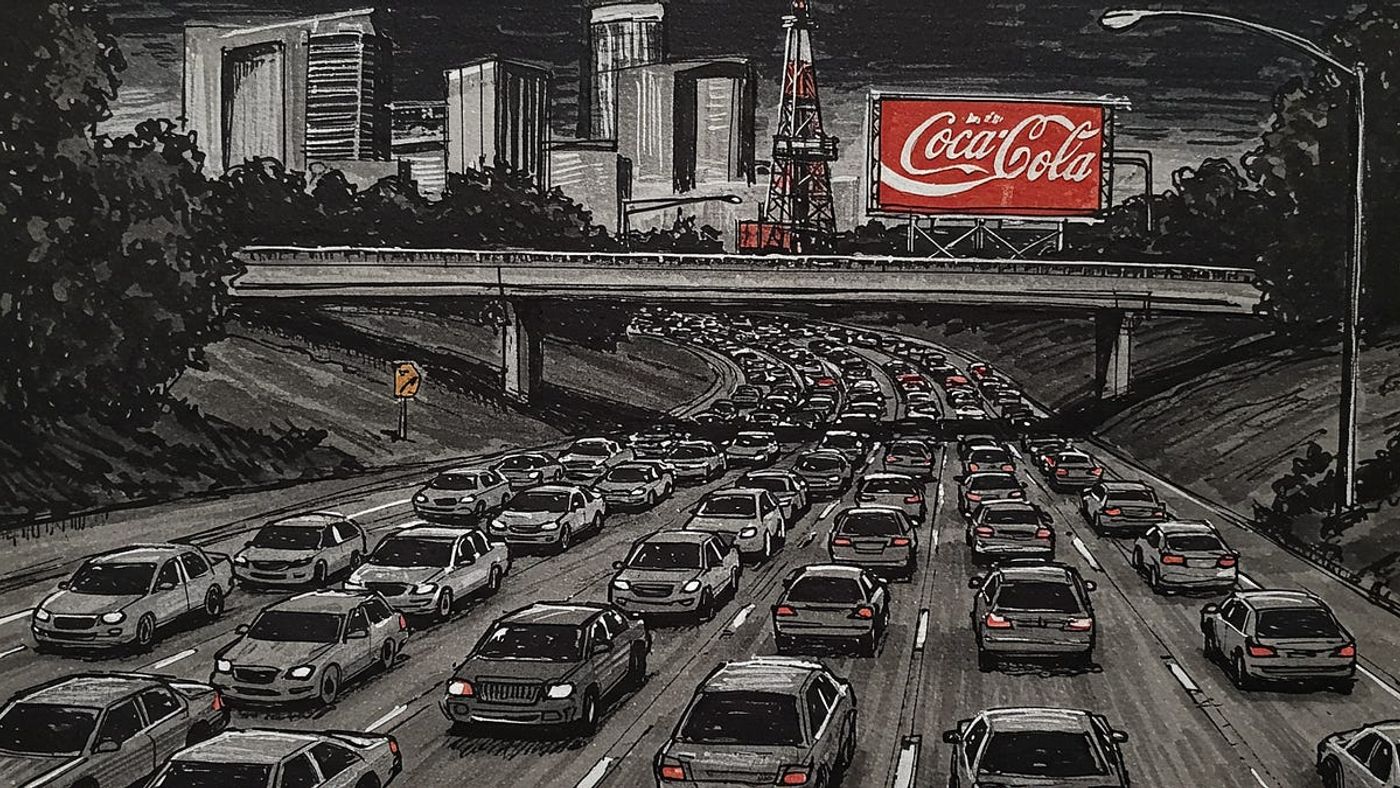
America’s highways are more metaphor than transportation. Asphalt prayer wheels. Endless lanes of spiritual inertia. We’re a country stuck in traffic—economic, geopolitical, spiritual—and all we can do is honk. Let’s start at home.
Pittsburgh, of all places, has become America’s housing unicorn. It’s the only major U.S. city where it’s cheaper to own a starter home than to rent one. Cheaper by $111 a month—not enough to buy a dream, but enough for a sandwich and half a therapy session. Pittsburgh missed the COVID-fueled home-price feeding frenzy. Its homes were built back when you could smoke in maternity wards and still trust the mailman. Median build year? 1961. Houses like cast iron skillets—seasoned, indestructible, and weirdly comforting.
Meanwhile, in Phoenix, you can smell the drywall sweating in the biblical heat. And in Atlanta, it now takes two podcasts and a mild existential crisis just to get across town. God threw a Waffle House on every corner and said, "Let there be gridlock."
But back to Pittsburgh—while the rest of the country burns rent checks like incense, it’s holding the line with stoic steel-town stubbornness. This, in a nation where the average homebuyer now pays $900 more a month than renters for the privilege of pretending they own anything but their toothbrush.
Then there’s D.C.—home of stone monuments and stylized ambition—now crowned the worst traffic in America. The average commuter spends 71 days a year frozen in forward motion. Blame Trump’s return-to-office orders. Blame karma. Blame the sheer gravitational force of bureaucracy. Just don’t blame the Redskins.
On the food front, things are getting weird in all the right ways. Trump and RFK Jr. are tag-teaming the junk food industrial complex under the MAGA-rebranded “Make America Healthy Again” banner. The result? A seismic shift in the food supply that feels like Whole Foods got possessed by a libertarian exorcist.
Coca-Cola is swapping high-fructose corn syrup for cane sugar. PepsiCo is thinking about it. Skittles are losing their chemical sheen. Even In-N-Out is flipping patties in beef tallow like it’s 1955. The new champions? Cane sugar and rendered fat—because if you’re gonna die early, at least die artisanal.
But here’s the catch: healthy food costs more. Always has, always will. Cane sugar is spiking. U.S. contracts are now double the global benchmark. We’re staring down a future where your soda is cleaner but costs as much as a minor outpatient procedure. Reform? More like culinary nationalism in yoga pants.
Now, pan the camera out.
Globally, the dollar isn’t just money—it’s a weapon. China’s been quietly trying to dull the blade, building its own financial plumbing to escape Washington’s economic chokeholds. The BRICS nations are assembling their own currency Voltron. And in response, the U.S. is doing something genuinely sneaky: leaning into stablecoins.
These little crypto-stamps—digital dollars backed by U.S. Treasury bonds—are becoming an accidental empire. They already handle trillions in volume and are on track to hold more Treasurys than China by 2028. What started as a libertarian fever dream is now a liquidity firehose for Uncle Sam. Dollar dominance in sneakers.
Congress even passed the GENIUS Act—because why not name your legislation like a TED Talk?—requiring stablecoins to be backed by Treasurys. Translation: Silicon Valley now helps bankroll the federal deficit. If that sounds insane, it’s because it is. But it’s working.
Meanwhile, OPEC’s playing oil chess with the patience of desert prophets. They’re easing production cuts just enough to stay relevant, while U.S. shale hangs on like a drunk cowboy. With fewer new discoveries and a world still hooked on fossil fuel, OPEC knows one truth: there’s no peak oil demand on the horizon. Only peak wishful thinking.
And then there’s Europe. Ah, Europe.
Europe is busy becoming a tasteful ruin. Their GDP is half ours and falling like a soufflé left in a power outage. Their energy prices make artisanal wind look cheap. Industry? Fleeing to the U.S. like it’s 1946. Their pension systems are upside-down snow globes, and their politicians talk like IKEA instructions. The last useful idea out of Brussels was... you know what, let’s not strain ourselves.
They’ve become what Greece was to Rome: a postcard, not a plan. A place you visit to sip espresso and remember the Enlightenment, not start the next one.
So here we are. A world of traffic—economic, political, moral. America’s throwing cash at the dirt to mine rare earths, rewriting food labels like scripture, and digitizing its currency for battle.
Europe lighting candles for the Enlightenment.
And Atlanta’s still trying to merge onto I-285.
If you can’t beat the traffic, at least describe it.