Milton Watson was scraping the last of his eggs when an aging pickup truck ambled into his driveway, dust rising like a restless ghost. The house was a quarter-mile from anybody, morning visitors were as rare as rain in July.
-
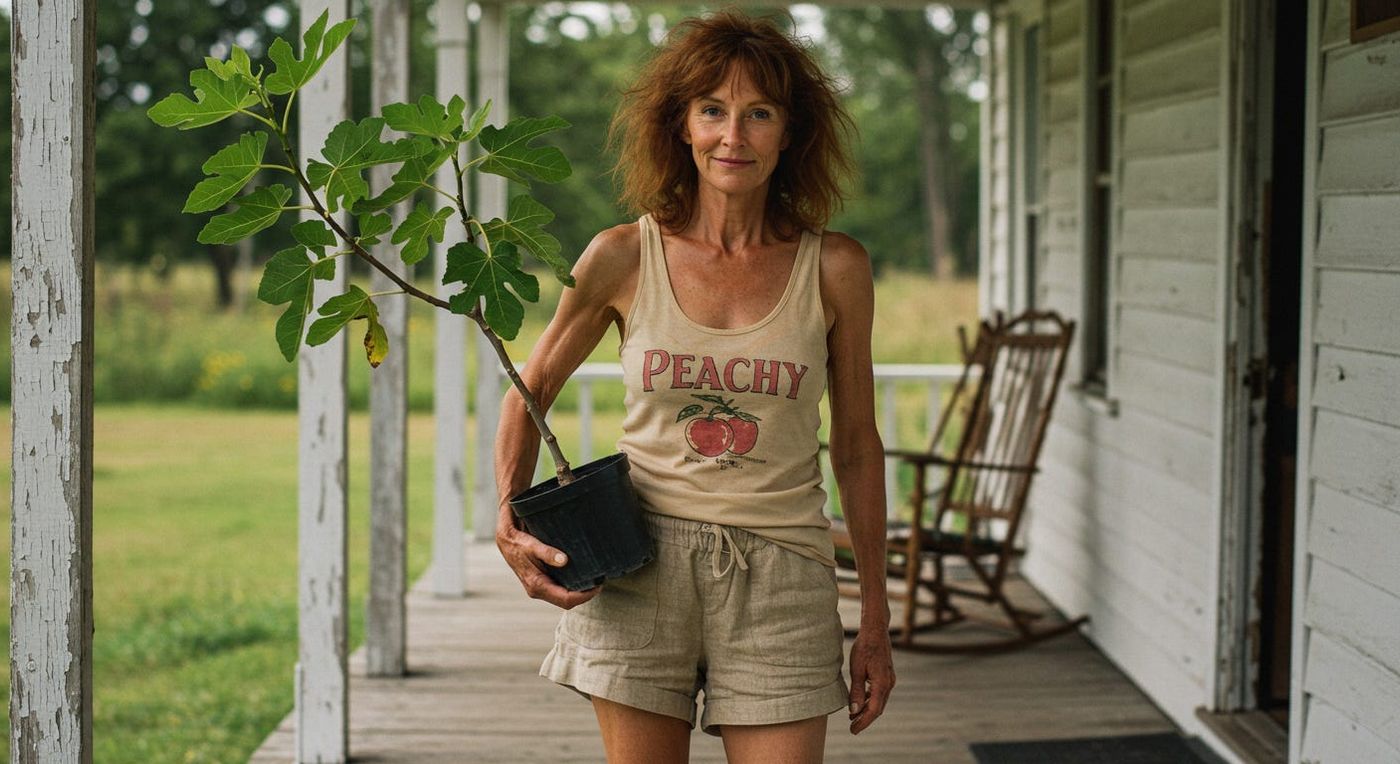
It was Molly. Barefoot. Hair a tangled dare. Tank top hollering PEACHY. She held a potted fig tree, bright green in the early daylight.
-
“Fig trees don’t die easy,” she said. “Just need dirt and time.”
-
Milton stepped aside without expression. “Time I got. Dirt’s out back.”
-
She nudged past him, grazing the photo of the two of them laughing in a happier time. Back when reckless was a lifestyle, when the world was still possible.
-
She took the old spade from the hall closet - she knew it would be there - and headed for the back yard like the house still remembered her.
-
Milton watched from the porch as she knelt in the yard, digging like she meant it. Like she was unearthing something. Or hiding it. Her hum was low and rough. Could’ve been gospel. Could’ve been spite.
-
Memories hit him all at once, he corralled them. She stood the fig tree in the hole, filled in around it, stepped back to admire her work.
-
“You gonna water it?”
-
“Eventually.”
-
“Figures.”
-
She pulled a tomato off the vine by the porch.
-
“Coffee?”
-
“Fresh pot.” She wheeled and headed for the kitchen.
-
Milton placed the hose by the root, let the water run. The ground drank deep, like it had been waiting ten years.
-
At the table, his coffee black, hers with the hazelnut cream she always seemed to carry with her. The house held its breath.
-
“Fig trees take time,” he said. “Stubborn bastards.”
-
“Like you.”
-
“You ain’t changed, Mol. Still swinging.”
-
“And you’re still dodging.” Her finger traced the rim of her mug. She glanced at the photo again. A laugh caught in time. Before consequence. Before silence.
-
“Why’s it so damn quiet here?” she asked.
-
“Thought you liked it that way.” A flicker of a memory singed her. She didn’t flinch. “You been busy?” Milton looked at the window, not sure he wanted to know.
-
“Here and there. Odd jobs, sketches, old movies. You?”
-
“Keeping the place running. Helping at the hardware store. Trains. Built a whole town around them. Takes up the whole barn.”
-
She studied him. “You turned your workshop into a model train village?”
-
“Yeah, that's about the size of it.”
-
“Are you wondering why I’m here?”
-
He shrugged. “Reckon you needed somewhere to pot a fig.” The silence curled.
-
Milton rose, picked up the pruning shears he had left on the counter, walked outside and began trimming the roses.
-
-
Later, she wandered the house. A ghost with keys. She didn’t pry. Just listened. The couch sighed under her. Beneath a cushion. Milton’s sketchbook. Clothbound. Frayed.
-
She opened it. A blue jay, head tilted. Below it: East fencepost, 6:40 AM. Sparrows. Crows. A red-tailed hawk under gunmetal sky. A pressed leaf marked a nuthatch mid-descent.
-
She held it to the light. Tucked it back. Smudged graphite with her thumb.
-
In the bedroom they once shared, she found a made bed. Paisley quilt. Sharp corners. A perfume bottle on the nightstand, a decorative pillow he’d never pick. Closet neat. Shirts in order. She shut the door like closing a chapter. Same room. Different occupant.
-
In the refrigerator she found mustard. Eggs. One beer. She shook her head, shut it. The junk drawer held loose batteries, a rusted key, a grocery list (cornmeal, toothpaste, frozen peas). She folded it. Pocketed it.
-
Then the barn. Dust in shafts of gold. A red bicycle dangled above. And there it was. The train town. A miniature village. Mountains. A river of glass. A church without a roof. A post office with a crooked shutter. The train circled slow, humming like memory.
-
On the platform, a tiny figure in red. Chipped hem. Expectant.
-
Victoria.
-
Molly just knew. “Well,” she whispered. “Aren’t you just waiting for something.” She stepped back. Studied it. The bakery with its double loop. The papier-mâché dusk. A carved dog outside the barbershop. Nameless.
-
She nudged the red figure forward. Just a toe. The train passed. Indifferent.
-
-
Dusk. Milton came home with a paper sack. Nails, maybe. Or just ritual. The house was quiet, but lit.
-
Molly was on the couch. Sketching. Barefoot. Like she'd never left.
-
“Find what you needed?” he asked.
-
“Didn’t touch a thing.”
-
“Not what I asked.”
-
Her face betrayed her. “It’s all still here. Even the ghosts behave.”
-
He poured a glass of water. “If you ain’t driving, bed’s made in the back. Might be spiders.”
-
“You always did know how to charm.”
-
“I try.”
-
She took his glass. Drank. Their eyes held. Just a second. Then she vanished down the hall.
-
“Piece of work,” Milton muttered.
-
Dinner. Molly burned the bread. Garlic clung to the air. She moved like she’d always moved, imperfect, confident. He slipped to the barn.
-
The town glowed. He leaned in. Righted a sign. General Store. Fingers tender. Like forgiveness.
-
The red-dress figure was closer to the tracks now. He noticed.
-
He pulled the carving knife. A block of wood. Began again. A bird. Or maybe something else.
-
“I’m turning in” Molly called out, half expectant.
-
He didn’t answer. Kept carving. When he flicked the switch, the town went dark.
-
-
Morning. Sky the color of old bruises. Milton poured two thermoses. Molly appeared in his flannel over leggings.
-
“Borrowed this. Hope it’s not Sunday best.”
-
“If it is, you’ve elevated it.”
-
She raised her thermos. Toasted nothing in particular. They walked into the pines. Mist clung like breath. The trail had a new name. Pine Shadow Loop.
-
“Used to be just deer and me,” he said.
-
“Progress,” she replied.
-
“Bullshit.”
-
“Deershit.”
-
They walked. Not quite side by side. “Remember when you got lost out here?” he asked.
-
“I took the long way.”
-
“Long way got you poison ivy and a tick in your ear.”
-
“Minor details.” Molly touched his hand.
-
At the riverbend, Milton skipped a stone. Four bounces. Molly tried. One bounce. Plunk.
-
“Too much wrist. You used to get three.”
-
“Show-off.”
-
“Had time to practice.”
-
She sat down on a rock, pulled her sketchpad from her backpack. The train town. The red dress. A shadow beside her.
-
“Saw your birds. Wasn’t hidden.”
-
“Wasn’t open, either.” He looked. Then away. “You see too damn much.”
-
“Or you hide too damn well.”
-
A hawk circled. They watched. Then walked back, the distance space between them unchanged.
-
-
Molly strode into the bookstore. Cedar shelves. Sleeping cat. Soft bell. Victoria behind the counter. Linen shirt. Silver thumb ring.
-
“Didn’t expect you,” Victoria recognized her from the old photos.
-
“Wasn't expecting to be here.” They circled each other. Carefully.
-
Victoria walked to a shelf, pulled down a book. “Milton always reads Faulkner. Never buys one.”
-
“Sounds like him. Holding on without claiming.”
-
“He built that train after you left. It's his pride and joy.”
-
“Penance?”
-
“Or a cage.” Molly flipped through the copy of “As I Lay Dying” that Victoria handed her. She saw the leaf tucked into the river scene. Her jaw tightened.
-
“You his keeper now?”
-
“Just the one who's here.”
-
Molly left with the paperback.
-
Victoria watched her go. Wrote in her journal:
She’s not staying.
But she’s not gone.
-
-
Dusk. Porch. Fireflies. Tea cooling in their mugs. The fig tree’s shadow stretched toward the barn. Molly sketched the roots curling toward tire tracks. A faint figure stood behind the tree in her sketch, watching.
-
“I didn’t come to stay,” she said, after a bit.
-
“Didn’t think you did.”
-
“But I didn’t come to leave, either.”
-
He nodded, looked at the drawing. “That tree’ll need more than water.”
-
“Good thing you’re patient.”
-
The whistle of the tea kettle was more a truce than a promise.
-
-
Midnight. Molly slipped into the barn, flipped the lights on, Flipped the train switch. The town glowed.
-
She lifted the red-dressed figure. “You’ve been here long enough.” She set it away from the tracks. Then she saw it, the new figure. Flannel-shirted. Her. Milton’s work.
-
She placed it beside the red dress. Let them ride a loop. Together. Once. She didn’t turn off the lights.
-
-
Morning. Molly's truck was gone. Her sketchpad lay on the table, open to a silhouette of a fig tree. A note on it read "Keep watering.”
-
Milton stepped outside, watered the fig. Let the water run slow, like a prayer. Like a hymn.
-
He made his way to the barn, began carving a block of new wood. A man with a low slung hat and a distant look.
-
He placed it. Not beside either of the red dress or the flannel. But nearby. Watching.
A triangle. Unresolved. The train circled.
-
He walked the loop alone. A blue jay screamed. He sketched it. Rough. Alive.
-
The fig leaned east. Reaching.
No words. Just breath. Just forward.