Since November 2022, AI stopped being a nerdy dinner‐table argument and started showing up in your Zoom calls, your inbox, and probably your fridge. By 2025, it is no longer a concept. It is a lifestyle choice, a middle manager, and a minor deity that chides you when your productivity score is slipping.
Optimists gush about world‑fixing potential. Climate science? Check. Disease prevention? Absolutely. Resource scarcity? Hold my GPU. Skeptics feel less cuddly. Fifteen years of job automation looming like a category‑five storm, propaganda tools whispering into every ear, and a quiet paranoia that your toaster is leaking your secrets to the NSA. Americans, being Americans, choose sides. About half cheer. A third panic. The rest update TikTok and wait for the movie adaptation.
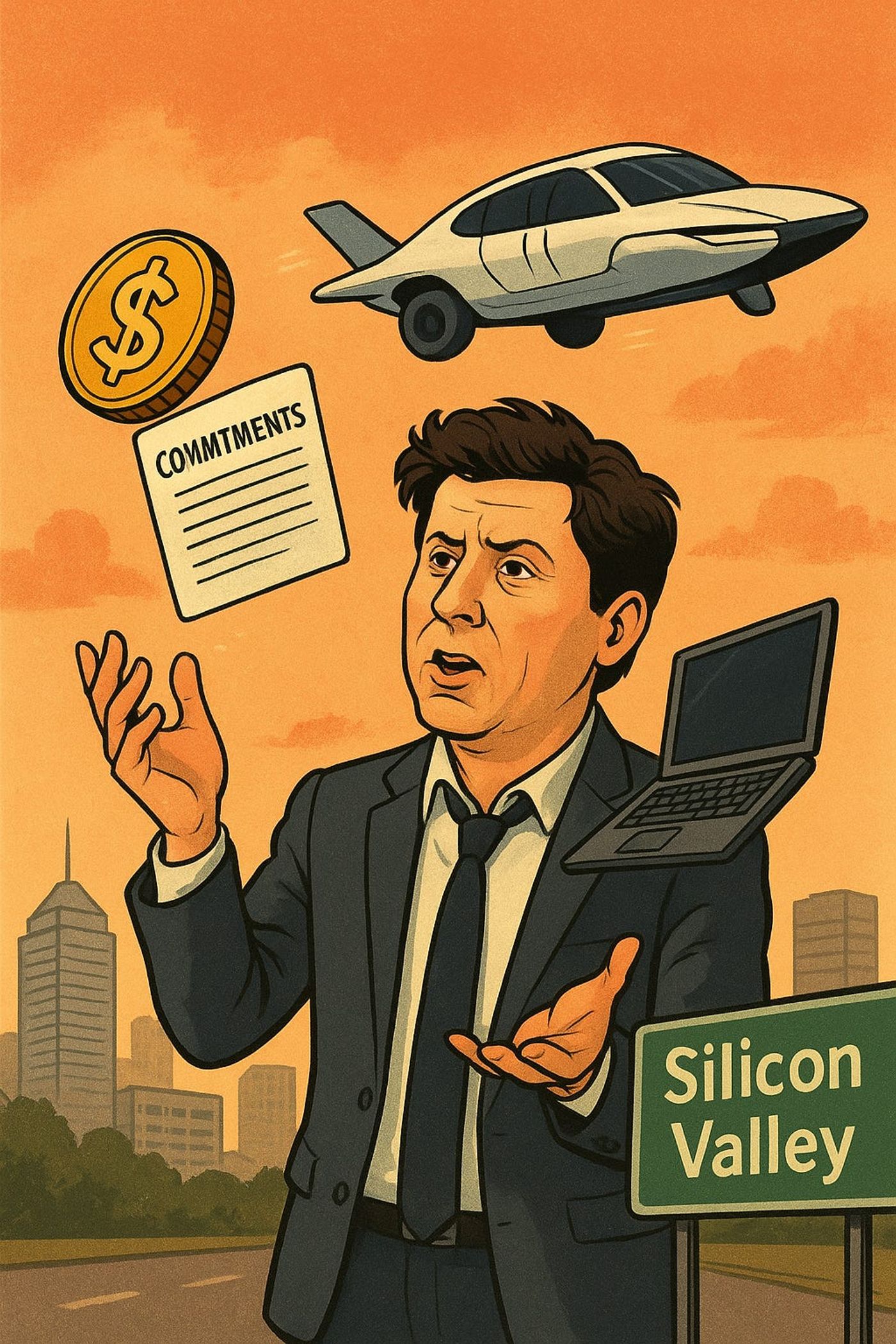
OpenAI stands in the middle of this circus, wearing a non‑profit costume and pledging money like a casino that forgot what the word “risk” means. Thirteen billion in revenue. One‑point‑four trillion in future commitments. When anyone asks how this math works, Sam Altman smiles like a man who already knows where the exits are. “I will find a buyer if you want to sell your shares”, Altman coos. The CFO insists the market just lacks enthusiasm. In other words, stop whining and bend over.
Under the hood, the deals look like a carnival ride with no meth addict pulling the brake. Nvidia shovels a hundred billion into OpenAI. OpenAI promises to buy Nvidia hardware until the heat death of the universe. Great work if you can get it. Everyone nods, calls it innovation, pretends it isn’t Barnum and Bailey, expects the government will clean up the mess if the music stops. Lehman and Enron would have loved that arrangement. They got perp walks instead.
Meanwhile, the California bureaucracy built an entire platform of “No.” No energy. No water. No housing. No anything that might bring joy. Every builder, founder, or engineer got trapped in a maze of endless permits and lawyers with clipboards. Silicon Valley tolerated it as long as the smartest people could sneak miracles through the cracks. Then the chokehold tightened. Power infrastructure hit a wall. Water systems never expanded. Housing turned into a luxury religion. At some point the “brightest” people in the state decided they were done playing defense.
So they flipped the table.
Better, faster, cheaper stopped being a slogan. It became a declaration of war against forced scarcity. If politicians block energy, engineers build it. If the state refuses to deliver water, technologists desalinate the ocean. If the market produces sky‑high rents, architects draw vertical cities, underground networks, and self‑sustaining biomes.
Pirate Wires, a publication that articulates Silicon Valley’s rising “abundance culture”, stands in the center of the culture shift. It is not writing inspirational essays. It is lighting matches. High‑speed trains from San Francisco to New York in half a day. Robot bartenders with better social skills than most humans. Hydroponic food towers feeding entire neighborhoods. Colonies on Mars. Gene drives to wipe out mosquitoes and invasive pythons. Weather systems under human control. Giant statues of Lady Justice on Alcatraz staring down the Bay like a judgmental aunt. The Moon as a state, probably with its own NBA franchise. These plans are not jokes. They are roadmaps.
The scarcity cartel is losing ground. Bureaucrats can glare, tweet, or schedule hearings. Nobody cares. The Valley wants abundance. Abundance means energy that does not depend on weather. Water that does not depend on rain. Cities designed for human life instead of zoning committees. It also means automation at a scale that will leave millions wondering what their job title even means. The tech crowd is brutal. Figure it out, they say. The future is busy.
The financial side remains a circus. Trillion‑dollar promises, circular financing, government guarantees, and CEOs waving their hands like magicians who misplaced the rabbit. That does not slow anything down. AI is already rewriting industry after industry. The machines do not sleep. They do not ask for permission. They do not care about scarcity because they were built to erase it.
The urban renaissance everyone talked about? It is happening through brute force and relentless math. Flying cars are in testing. Android assistants are becoming household appliances. Smart buildings recycle everything. Cities grow food, energy, and data as easily as they collect trash. Mars is a line item, not science fiction.
This is not a polite evolution. It is a reckoning. Silicon Valley stopped arguing with the old world. It is bulldozing over it, one algorithm at a time. Technology does not negotiate. It executes. And it doesn’t even understand the concept of passive-aggressive.