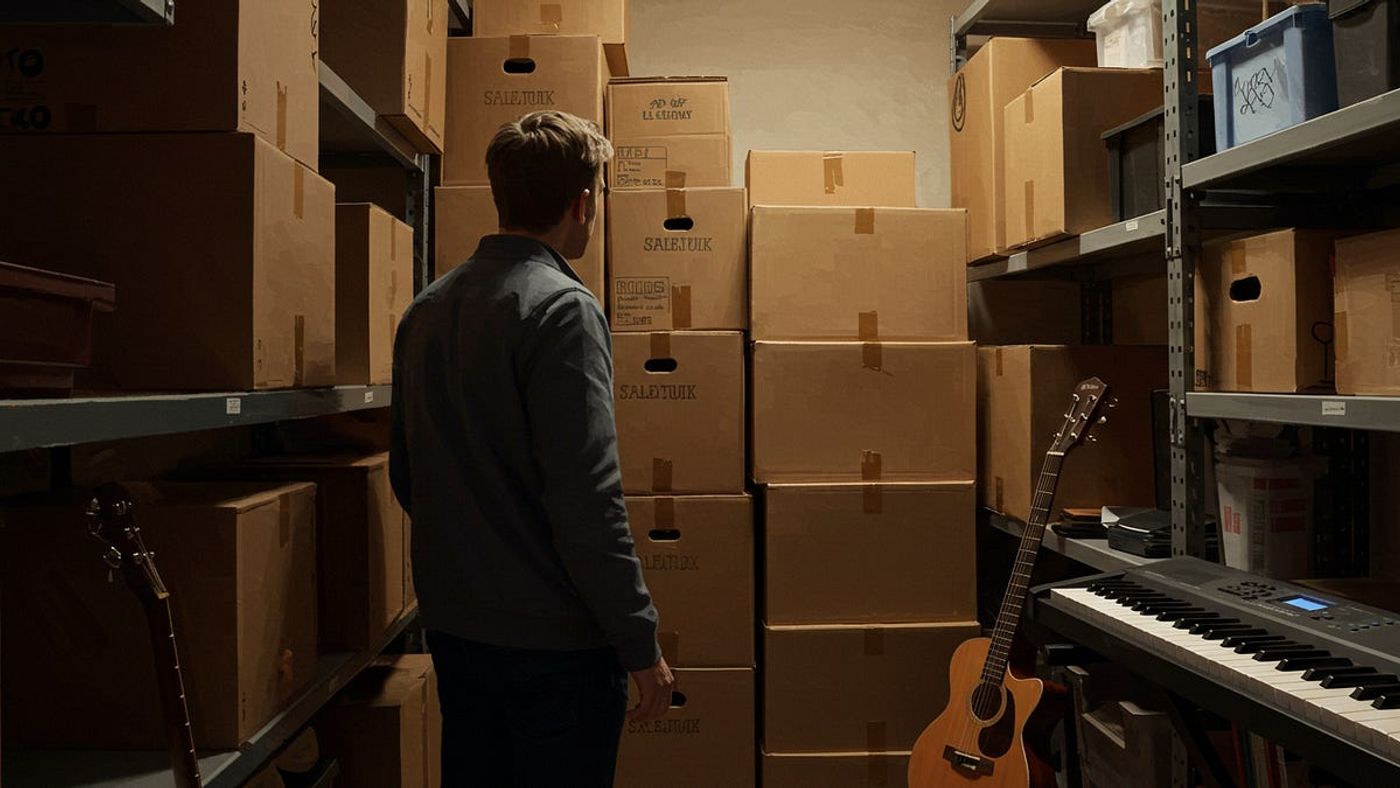
2025, for me, has been the year of letting go. One object after another, what once seemed essential, has slipped into the simpler category of stuff. If you immediately jump to the George Carlin comedy piece in your mind, well, so did I.
The lesson came slowly at first, then all at once. Initially, I believed my belongings held meaning of their own. The keyboard and guitars, the media studio, the mementos and bookshelves, they weren’t mere possessions. They were identity, vocation, even proof of a life. But once scuttled away to a storage unit in Georgia, they revealed themselves as silent matter. Absent the energy of use, they began to seem irrelevant.
We tend to treat possessions as extensions of ourselves. The curated bookshelf, the carefully outfitted kitchen, the garage full of tools. But step outside their orbit, and the spell breaks. Objects return to what they are—wood, plastic, metal, paper—waiting for a context that may never come again.
So what are we actually doing when we hold on to things?
I’ve come to see possessions as weapons in a battle against time. They hold a particular promise, that the hours spent will not slip away unmarked, that at least pieces of our lives are permanent. When at first you’re not surrounded by your familiar objects, you feel adrift, unanchored. Eventually, though, you move into flow. In that flow state, time itself becomes less relevant. The arsenal of objects loses its power. In a proper state of flow, there is no battle to fight.
One does wonder whether the state of flow will last. It is easier to trust a box in Georgia than to trust the mind’s ability to stay in the moment. And so we keep things “just in case,” hedging against the day when the current falters and we want our props back.
But life is exploration, a dance of seeking out novelty. Letting go of the past is a test of the future. More to the point, a test of the now. And what remains is more than I expected. Space, freedom, attention. A life less burdened by its own ballast.
We live in an age of storage units and overstuffed basements, of houses turned into museums of past selves. But deeper richness lies in release. I am suddenly a minimalist.
The boxes in Georgia may sit untouched, or they may one day catch up to me in a new place and time. Either way, the discovery is already made. The world feels larger when you have less holding you to it.