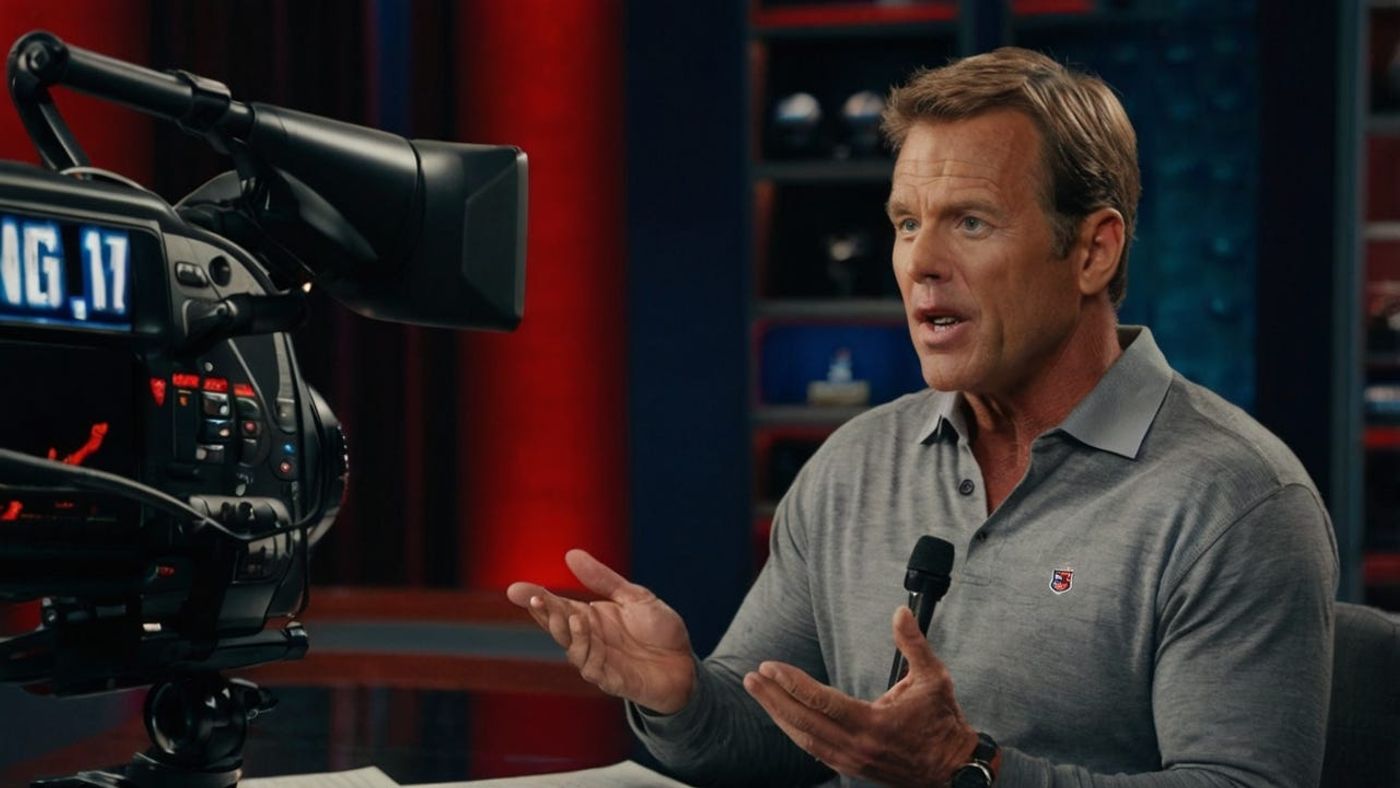
Lane Connor stares at the screen, an immaculate reflection of his own glory staring back at him, neatly packaged in HD for millions to see. He’s fifty-one, though the chiseled features of his youth remain defiant—sharp jaw, golden hair, and the imposing frame that once electrified stadiums. The former NFL quarterback, once the golden boy of Sundays, is now the smooth, polished voice behind the mic, narrating with gravitas every touchdown and fumble like some latter-day gladiatorial poet.
But there’s something in his eyes that seems off these days—something no camera can capture, but anyone close to him can see. Those closest, like his wife, Kelly, notice the flickers of unrest. They see a man staring into the abyss of his own reflection, a man on the brink of an existential crisis.
Lane Connor, whose name once roared like thunder across the vast expanses of the American heartland, is crumbling. Not from some midlife cliché of yearning for lost youth—no, that would be too easy.
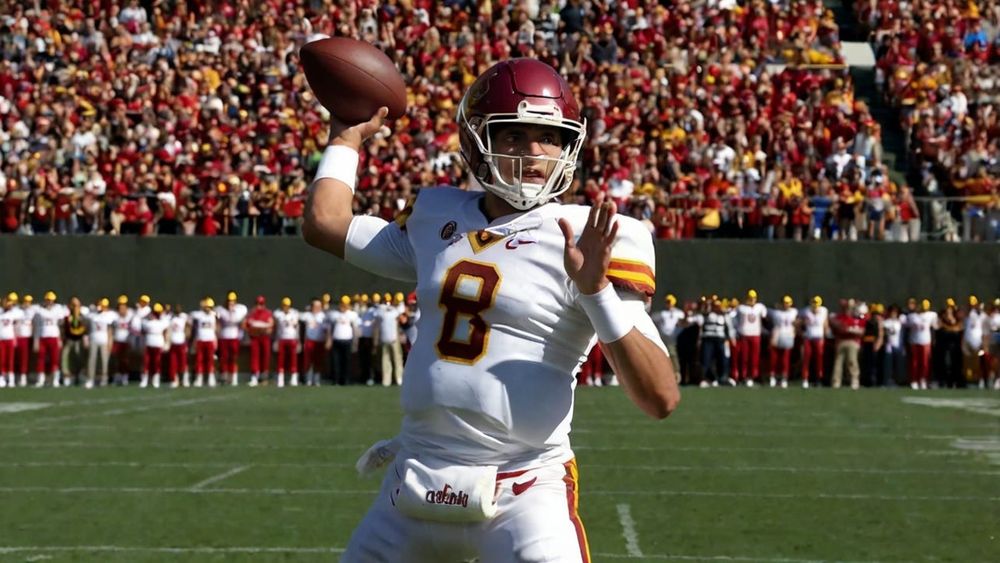
Lane is wrestling with a beast much older than the NFL and far more feral. Deep down, he’s always harbored a peculiar obsession, a secret gnawing ambition far removed from gridiron fame: Lane Connor, NFL legend, wants to hunt crocodiles.
You read that right. Crocodiles.
And not in some kitschy, crocodile-wrestling, reality-show kind of way. Lane doesn’t want to be the next Steve Irwin, charming the audience with a boyish grin. No, Lane wants to stalk the murky swamps, disappear into the wild, hunt these ancient predators with nothing but grit, primal instinct, and, God forbid, a massive Bowie knife. It’s the fantasy of a man who, for too long, has been tamed by the immaculate perfection of high-definition broadcast booths and gleaming city lights. He aches for the rawness of nature, for danger, for blood—his own or the crocodile’s. He yearns to hear the hiss of the unevolved.
Understandably, Kelly is horrified. “A crocodile hunter?” she asked him, incredulous, when he first mentioned his idea over their glassy, granite-countertop kitchen island. “You’ve had concussions. You’ve been sacked more times than I can count. Isn’t that enough danger?”

But Lane barely heard her. It wasn’t danger he sought—he already had that in spades, under the bright lights of packed stadiums where 300-pound linemen tried to end his life every Sunday. This, this calling to hunt crocodiles, was about something else. It was about the wild. About reclaiming something elemental, something untouchable by the carefully curated civilization in which he’d been entombed.
Lane Connor’s story isn’t simply about a man grappling with what comes after a legendary career. He’s a man whose entire existence has been defined by pressure, risk, and power. From his early days at Southern Cal, where he won the Heisman Trophy, to his NFL career where he led his team to three Super Bowls and won one of them, Lane thrived in chaos. He lived for the adrenaline, for the uncertainty of every down, every throw, every bone-crunching hit. He ascended to the NFL Hall of Fame not just through skill, but by becoming a master of navigating danger.
But now? Now Lane’s life has become sanitized. Polished. Safe. He’s the golden boy turned golden man, broadcasting games to millions of viewers, never breaking a sweat. And therein lies the problem. Lane doesn’t want safety. He doesn’t want admiration from a distance. He wants to feel again. He wants to confront the kind of danger that leaves no room for hesitation—the kind that only nature, red in tooth and claw, can offer.
You see, Lane Connor has been playing by the rules his entire life, and in doing so, has built a gilded cage around himself. Sure, he’s a millionaire, still admired by fans across the country, still able to get a table at any restaurant he pleases. But Lane’s soul is stuck on the fifty-yard line, forever dancing in a no-man’s-land of high-stakes expectations and conformity. Even as a broadcaster, he’s simply a sanitized version of his former self, analyzing games he can never again play, tethered to the polished safety of the studio.
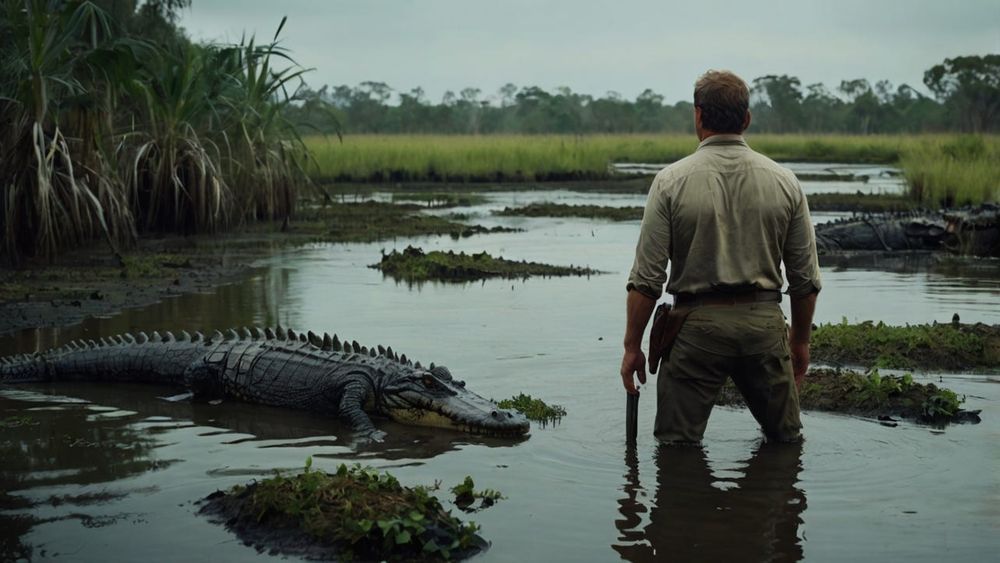
But out there, where the swamps meet the horizon in places no cameraman dares to follow, lies the wildness Lane craves. The primal call of the crocodile cuts through the sanitized modernity of his life like a gator’s jaws snapping through bone. And like all existential crises worth their salt, it’s irrational. It’s dangerous. It’s absurd. But it is, undoubtedly, real.
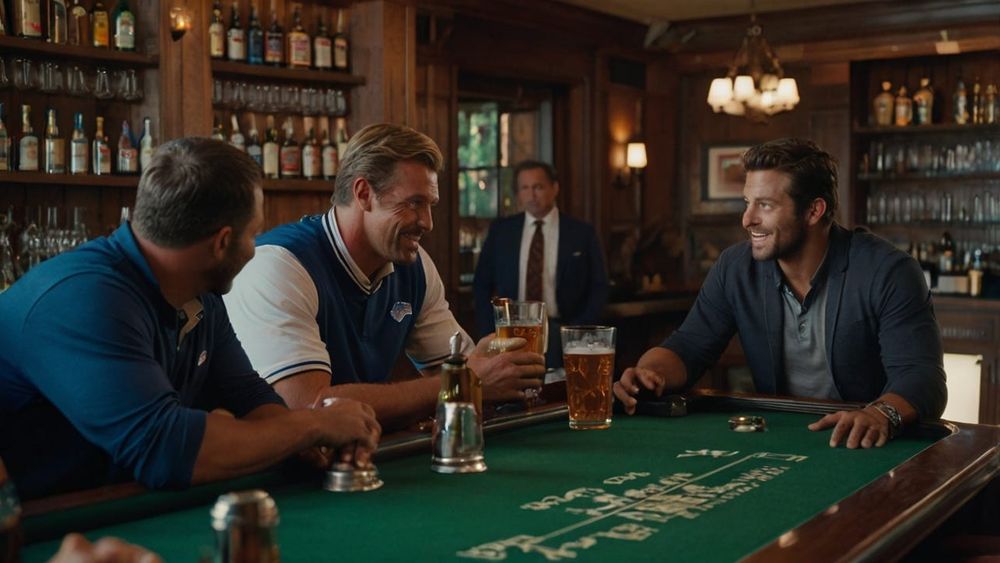
The thing about crocodiles, Lane will tell anyone willing to listen over his third scotch at the local country club bar, is that they don’t care about your net worth, or your Super Bowl rings, or your SportsCenter highlights. Out there, you’re just prey or predator. You’re either in the food chain or you're outside of it, and Lane Connor wants in. Not for the thrill of it, but for the sense that, finally, he’ll be facing something that doesn’t give a damn about his accomplishments. He’ll be squaring off with nature itself, and that, he figures, is the closest thing to salvation he’s likely to find.
Kelly, God bless her, tries to understand. But she can’t. She didn’t marry a swamp-hunter. She married the quarterback, the star, the man who could command a room full of corporate execs with the same confidence as he once commanded a huddle of sweating giants.
And sure, it’s nice that Lane still provides for the family with his cushy TV gig. The money’s great, the travel is first-class, and there’s no risk of him ending up paralyzed after a particularly vicious hit. But she sees it in his eyes, the restlessness. Lane is losing touch with who he really is. Or maybe, just maybe, he's discovering who he was always meant to be.
The accolades, the victories, the record books—they are over. The script of Lane’s life, written by and for others, ends there. But deep down, Lane is not a man content with endings. He’s lived his entire adult life as a warrior, a competitor in one of the most brutal sports on earth. For years, his identity was forged in the furnace of competition, of body and mind pushed to their absolute limits. The field was where he felt alive, where split-second decisions determined life or death—at least metaphorically.
And now, as a broadcaster, he’s trapped. The world applauds him still, but the spark of true danger, of raw confrontation with the unknown, has been stripped from his life. Lane is not interested in safe success—he’s interested in meeting forces that don’t care about your name, about your money, or your trophies. He misses the sense of battle, the feeling of having nothing assured but the moment in front of him. And in some deep corner of his psyche, Lane has come to see himself as a man out of sync with modern life—a life of banality and polished success.
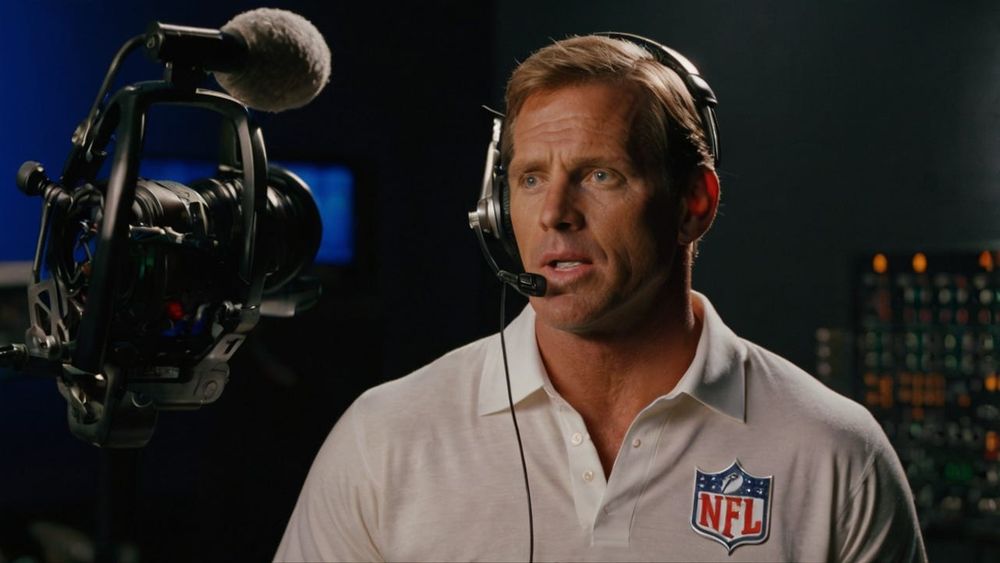
The crocodiles, in a way, are Lane’s path back to meaning. He sees them not just as dangerous animals but as a reminder that life is ancient, brutal, and unrelenting. To hunt one is to prove to himself that he can still face death—not in some metaphorical, played-out fashion, but the real thing. It is not about recklessness but about rediscovering a sense of urgency and elemental fear. Lane Connor wants to feel alive again, and for him, life’s essence is found not in studio lights or paychecks but in the murky, dangerous waters of the swamp.
Lane isn’t having a typical “midlife crisis”. He’s experiencing something far deeper—a man who has conquered all the civilized milestones and now finds them empty. He is returning to something primal, because he must. Lane’s character, his very sense of self, is built on the idea of conflict with forces greater than himself.
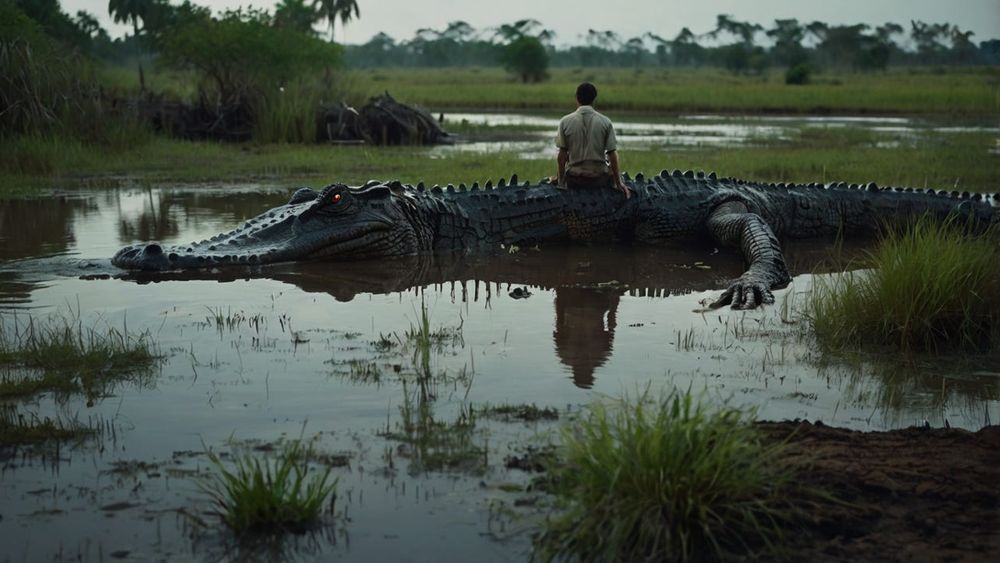
Knowing Lane, the crocodiles better watch out. Because there’s a storm brewing in that man's heart, and sooner or later, he’s going to find himself knee-deep in some godforsaken swamp, staring down an apex predator with nothing but a blade in his hand and a smile on his face.